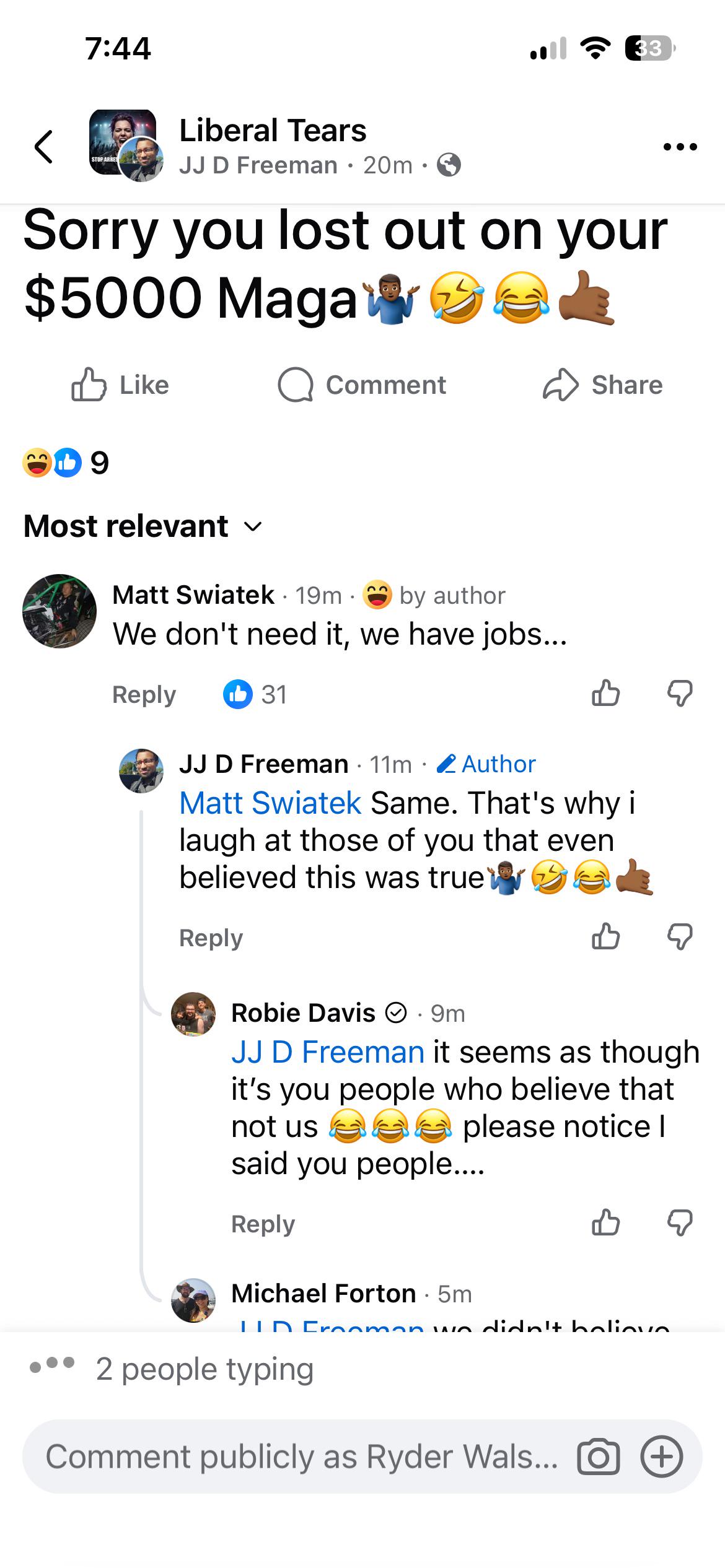
The debate over financial handouts has long been a contentious issue in American politics, often revealing deep-seated beliefs about work, wealth, and societal responsibility. Recently, a striking example of this tension emerged, showcasing the cognitive dissonance that can arise when political ideology clashes with personal gain. At the heart of this discussion is the question: Who deserves assistance, and why does the source of that aid matter so much?
The Paradox of Political Handouts
One of the most glaring contradictions in this debate is the selective acceptance of financial aid. While some proudly declare, 'I make 118k a year. I don’t need it,' others point out the irony in such statements. As one observer noted, 'It’s that BS “I got mine” mentality that makes the US a complete and utter dump.' This sentiment underscores a broader issue: the tendency to reject aid when it benefits others but embrace it when it serves personal interests.
The discussion took a humorous turn when the topic of government-funded programs was raised. 'All democrats are slackers mooching off their parents as they piss away their rent money on Starbucks, avocado toast, blue hair dye, and sex changes,' one commenter joked, adding a sarcastic '/s' to highlight the absurdity. Another quipped, 'The sex changes are free through the elementary and high schools. 😆 🤣 😆 🤣 😆 🤣 😆,' further mocking the exaggerated claims often made in political discourse.
The Role of Propaganda and Perception
Propaganda plays a significant role in shaping these attitudes. As one person remarked, 'I don't get it. Why do they think we don't have jobs? Was propaganda sent out that I never caught wind of?' This question touches on the pervasive narratives that divide Americans, often pitting one group against another based on misinformation or stereotypes.
The idea that certain groups are more deserving of aid than others is a recurring theme. 'They lack empathy. If you have more you must want to keep it that way,' one commenter observed, highlighting the self-centered mindset that can drive opposition to social programs. This lack of empathy extends to racial and gender dynamics, as another pointed out: 'Whites MUST be better than blacks, Men MUST be in control of women, their jobs MUST be better because how else could they possible have them?'
The Irony of the $5,000 Promise
A particularly striking example of this hypocrisy emerged around the promise of a $5,000 check, which was used as a political carrot during an election. 'You're gonna need $5000 when gas and taxes skyrocket,' one supporter argued, only to later dismiss the idea when it didn’t come to fruition. Another commenter noted the irony: 'For not liking socialism they certainly love the Trump checks.'
The disconnect between rhetoric and reality was further highlighted by the reaction to COVID-19 relief funds. While some expressed gratitude for the aid, others criticized businesses that received support but still closed. 'Ill never forgive you sweet tomatoe. You were a fucking soup and salad buffet. How fucking hard could it have been to stay open you assholes!?' one person vented, underscoring the frustration with perceived misuse of funds.
Why It Matters
This debate is more than just a political squabble; it reflects deeper issues of fairness, empathy, and accountability. The 'I got mine' mentality not only undermines collective well-being but also perpetuates divisions that hinder progress. As one commenter aptly put it, 'If Republicans have jobs, but Democrats don't, why are Democrats disproportionately disenfranchised by any attempt to restrict voting by mail or outside of work hours?'
In the end, the discussion serves as a reminder of the importance of consistency and compassion in political discourse. Whether it’s a $5,000 check or COVID relief, the question of who deserves help—and why—continues to challenge Americans to look beyond their own interests and consider the greater good.